Guide to Preventive Care for Dogs
We appreciate your commitment to your dog’s health! Adult years are full of opportunities to strengthen wellness habits that promote longevity and comfort. This guide outlines our key recommendations for routine exams, vaccines, parasite prevention, nutrition, dental health, and lifestyle care—designed to support your dog’s best health today and in the years ahead.
Preventive Care Checklist
Click the sections below to see our recommendations to promote lifelong health and comfort
Annual Veterinary Exam & Consultation
Regular veterinary exams and consultations are a cornerstone of your dog’s wellness care. A thorough exam at least once a year allows us to:
- Assess your dog’s overall health from nose to tail
- Detect subtle changes or early signs of disease before symptoms appear
- Discuss behavior, nutrition, weight, and lifestyle factors that impact health
Establishing baseline values and patterns for your dog helps us spot even small changes over time, preventing problems and supporting long-term health and comfort.
Nutrition and Body Condition Scoring
Feeding for a Longer, Healthier Life
Everyday nutrition choices have a major impact on long-term health. Lean dogs live 15% longer—nearly two additional years—and enjoy delayed onset and reduced severity of chronic conditions like arthritis. Maintaining a healthy body condition is the #1 modifiable factor for improving your dog’s lifespan.
Core Recommendations
- Limit treats, table foods, and chews to no more than 10% of your dog’s daily calories
- Many adult dogs do best on a healthy-weight or dental-support diet
- No free lunch! Try out puzzle feeders or scatter feeding to add daily enrichment
- Select foods made by companies that meet WSAVA nutrition guidelines, including Hill’s, Purina, Royal Canin, Iams, Eukanuba, JustFoodForDogs, The Farmer’s Dog, and Freshpet.
How to Assess Body Condition
- Ribs should be as easy to feel as knuckles on an outstretched human hand
- A defined waistline should be visible from above and from the side
- Check out the Dog Body Condition Score Chart from WSAVA
Dental Care
A healthy mouth is essential for long-term health and comfort. Most dogs develop oral disease by age 3, but many of these issues are preventable. Here are the two major canine dental issues:
Periodontal Disease (disease around the tooth)
One of the most common—and most preventable—sources of chronic pain and inflammation
How periodontal disease develops:
- Plaque forms on teeth as a soft, sticky film
- Plaque left on teeth quickly mineralizes into tartar and triggers gum inflammation, known as gingivitis.
- Left untreated, gingivitis leads to permanent bone loss, called periodontal disease.
Home care to prevent gingivitis and periodontal disease:
- Daily brushing or dental wipes are the gold standard
- Dental diets (Hill’s t/d, Pro Plan DH) provide mechanical cleaning and are the next best option
- Chews can help but add calories—use wisely, especially for dogs prone to weight gain
- Water and food additives are better than no dental care
- Look for the VOHC seal to ensure a product has been proven effective
- Find a list of proven products at VOHC.org
Endodontic Disease (disease inside the tooth)
Endodontic disease occurs when the inside of the tooth is damaged—most often due to traumatic fractures.
Prevention
- Avoid hard chews and toys.
- Rule of thumb: if you can’t bend it, it can probably damage teeth. Our most common offenders: bones, antlers, Nylabone chew toys, rocks
- Choose VOHC-approved chews.
Professional Dental Evaluation
An anesthetized oral evaluation with full-mouth X-rays, cleaning, and polishing is indicated at the first sign of disease on an awake exam (usually gingivitis or damaged tooth). This allows us to identify and address hidden pain and disease early.
Vaccinations
Vaccines protect your dog from serious, often life-threatening diseases. We follow national guidelines for our patients.
Core Vaccines: recommended for every dog
- Rabies Required by law in many areas. Protects against a fatal disease that can be transmitted to people.
- DAPP (Distemper, Adenovirus-2, Parvovirus, Parainfluenza) Protects against highly contagious viruses that cause severe neurological, respiratory, and gastrointestinal disease.
- Leptospirosis Protects against a bacteria spread by wildlife or other mammals. It can cause kidney and liver failure and is contagious to humans.
Lifestyle Vaccines: recommended for dogs based on exposure risk
- Bordetella Protects against the common cause of “kennel cough.” Recommended for dogs who board, groom, visit dog parks, or regularly meet other dogs. Also recommended for all brachycephalic (short-nosed) breeds, due to higher risk for severe disease if exposed.
- Lyme Ticks are abundant here, but Lyme disease is not. This vaccine is recommended mainly for dogs who travel to regions with higher Lyme risk.
- Canine Influenza Protects against contagious respiratory viruses. Since we haven’t seen outbreaks in our region, we mainly recommend this vaccine for dogs traveling to areas with known canine influenza activity.
After-Vaccine Care: What’s Normal vs. Concerning
Common, mild, normal responses in the first 24 hours:
- Slight tiredness or sleeping more
- Mild fever
- Soreness at the vaccination site
- Mild decrease in appetite
Signs of an allergic reaction—seek immediate medical care:
- Vomiting or diarrhea
- Facial swelling
- Hives
- Difficulty breathing
- Severe or persistent lethargy
- Collapse
Year-round Parasite Protection
Year-round parasite prevention is important for protecting both your dog and your family. All dogs in our area need reliable protection against fleas, ticks, heartworms, roundworms, and hookworms.
Here in the Ozarks, our parasites can remain active year-round and many can be spread to humans.
Our recommended preventative: Simparica TRIO — a once-monthly flavored chew that protects against heartworms, fleas, ticks, and common intestinal parasites.
If TRIO isn’t the right fit, we can help guide you to alternative options.
For more information about canine parasites and their prevalence in the Ozarks, visit petsandparasites.org. Check out our disease screening recommendations in the next section.
Annual Disease Screening (Lab Testing & Diagnostics)
Routine screening is a cornerstone of our preventive care approach. Many chronic diseases develop silently long before outward signs appear. By performing these screenings regularly, we can identify early changes, intervene proactively, and support your dog’s health and comfort for the long term.
Annual Infectious Disease Screening
- Heartworm Test
- Heartworm disease is present in our region, and annual testing is required even for dogs on prevention because missed doses, resistance, or other factors can still lead to infection.
- Tick-Borne Disease Screening
- Ticks are extremely common in the Ozarks, and yearly screening helps us catch tick-borne diseases such as Ehrlichia early, often before any symptoms appear.
- Around 25% of dogs tested in Taney County show exposure to Ehrlichia each year
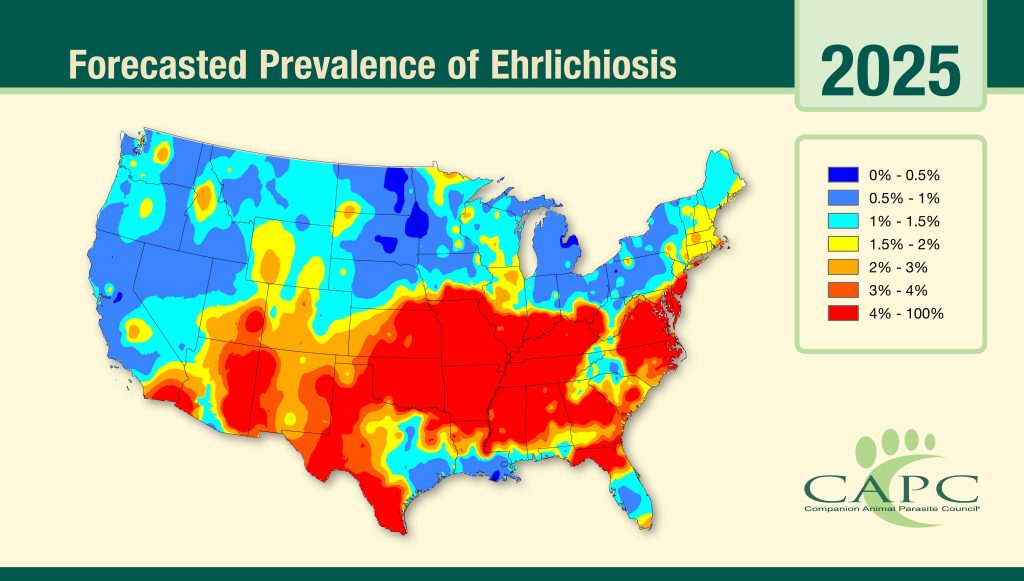
Forecasted Prevalence of Ehrlichiosis in 2025
- Around 25% of dogs tested in Taney County show exposure to Ehrlichia each year
- Ticks are extremely common in the Ozarks, and yearly screening helps us catch tick-borne diseases such as Ehrlichia early, often before any symptoms appear.
- Fecal Exam
- Screens for intestinal parasites that can affect both pets and people. Recommended at least annually for healthy dogs on preventives, and more often for dogs with higher risk.
Annual Preventive Screening for Signs of Early Disease
- Comprehensive Blood Panel
- A complete blood count and chemistry panel provides a detailed look at organ function, including:
- Early kidney and liver changes
- Blood sugar and electrolyte abnormalities
- Protein levels and inflammation markers
- Red/white blood cell counts and platelet status
- A complete blood count and chemistry panel provides a detailed look at organ function, including:
Establishing baseline values for your pet allows us to detect subtle but meaningful changes in future years, helping catch problems early and keep your pet healthy.
Daily Activity, Exercise, and Enrichment
Activity needs vary based on breed, age, and size. Low-energy dogs may be satisfied with a daily walk around the block, while high-energy dogs need more vigorous exercise such as running, hiking, swimming, fetch, or dog sports.
On days with inclement weather, consider indoor options: running up and down stairs, hide-and-seek, treadmill sessions, or building a DIY obstacle course from all those Amazon boxes, a broom handle, and the ottoman.
Mental stimulation is just as important as physical activity. Great options include trick training, scent games, recall practice, puzzle feeders, and reinforcing basic commands.
To prevent “weekend-warrior” injuries, try to keep activity levels consistent throughout the week instead of relying on occasional intense exercise.
Identification & Safety
Keeping your dog safe starts with reliable identification and a hazard-aware home. We recommend a microchip with up-to-date registration along with a collar with visible ID. These simple steps greatly increase the chance of being reunited if your dog is ever lost.
At home, protect your pet by keeping common hazards out of reach—chocolate, grapes/raisins, onions, garlic, xylitol-containing foods, medications, household cleaners, trash, rodenticides, and other toxins.
A few small precautions go a long way toward preventing emergencies.
Spay or Neuter
We recommend spaying or neutering unless your dog is intended for breeding. These procedures help prevent unwanted litters and provide health and behavioral benefits for most dogs.